

Support for people leaving high-control religions
Leaving a high-control religious group or cult can mean losing your family, friends, and community all at once. You don’t have to go through it alone. Faith to Faithless is run by people who have been through it themselves.
Our helpline is for anyone questioning or leaving a high-control religion. It’s free and confidential, and run by trained volunteers who understand.
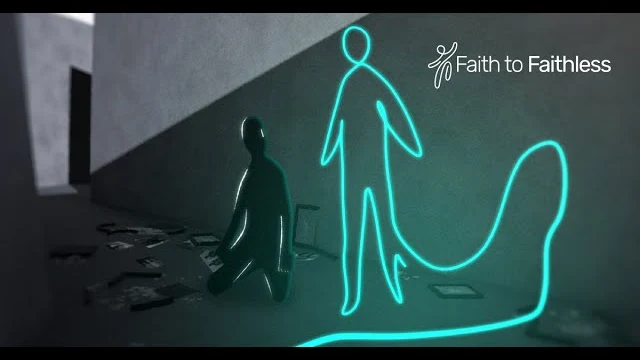 Watch the animationWatch our animation, Introducing Faith to Faithless (opens a video)
You’re not alone. Our short animation shows what it can be like to leave a high-control religious group, and how Faith to Faithless helps.
What do you want to talk to us about?
Choose the one that fits best. Whatever your situation, Faith to Faithless is free and confidential.
I’m doubting my faith
You don’t have to have left to talk to us. Many people call while they’re still working out what they believe, and no one will tell you what to think.
I’m living a double life
Many people keep their doubts hidden from family, friends, or their community, sometimes for years. It can be exhausting and lonely. You can talk to someone who understands, in confidence.
I’ve left my faith
Leaving can mean losing family, friends, and community all at once. We can help you through it, and introduce you to others who have left, at our socials and peer support groups.
I want to ‘come out’
Telling family or friends that you’ve left can be hard, and sometimes risky. Our volunteers can help you think through whether, when, and how to tell people, and how to stay safe.
I’m in danger
If you’re in immediate danger, call 999. If you need to talk to someone now, Samaritans are free on 116 123, day or night. When you’re safe, our helpline can support you with what comes next.
Call 999Call Samaritans on 116 123Call free on 0800 448 0748
I’m a professional supporting someone
Police, social workers, health staff, local authorities, and others can email us for advice. We also run apostasy awareness training for organisations.
How we can help
Faith to Faithless has supported people leaving high-control religions since 2016. Everything we do is free.
Helpline
Talk to a trained volunteer, free and in confidence, three days a week. Call 0800 448 0748.
Call the helpline →Peer support groups
Meet others who have left, online and in person. A short, private safety chat comes first, to keep everyone safe.
Ask about joining →Socials and events
Relaxed get-togethers around the UK, and public talks where people share their stories of leaving.
See upcoming events →Support for asylum seekers
We support apostates seeking asylum in the UK, including letters to the Home Office about their situation.
Contact us →Training for professionals
Apostasy awareness training for police, NHS, social services, local authorities, and charities, so people get the right help.
About our training →Volunteer with us
Have you left a high-control religion? Use your experience to help others, on the helpline or at our events.
Find out more →What happens when you call
A trained volunteer answers
Many of our volunteers have left high-control religions themselves, so they understand what you’re facing.
Talk at your own pace
You don’t need to give your name, and there’s no right or wrong thing to say. We listen, without judgement.
Find your next step
If you’d like, we can tell you about our peer support groups and socials, and other services that can help.

Upcoming socials and peer support
Meet others who have left high-control religions, at relaxed get-togethers hosted by our trained volunteers, who have left religion too.
To keep everyone safe, we don’t publish venues. Each event page explains how to join.
Our impact
For ten years, Faith to Faithless has given people leaving high-control religions somewhere to turn.
- A registered charity. Faith to Faithless is part of Humanists UK, registered charity no. 285987.
- Strict safeguarding. We work to a strict safeguarding policy that puts your safety first.
- Trained volunteers. Every helpline volunteer is trained, and most have lived experience of leaving a high-control group.
- Recognised nationally. Volunteer of the Year at the 2024 Helpline Awards, from the Helplines Partnership, the UK body for helplines.
Too often the traumatic experiences faced by people leaving high-control religions are simply ignored. In a society where we all agree that freedom of religion is a fundamental right, we must believe the same for freedom from religion.
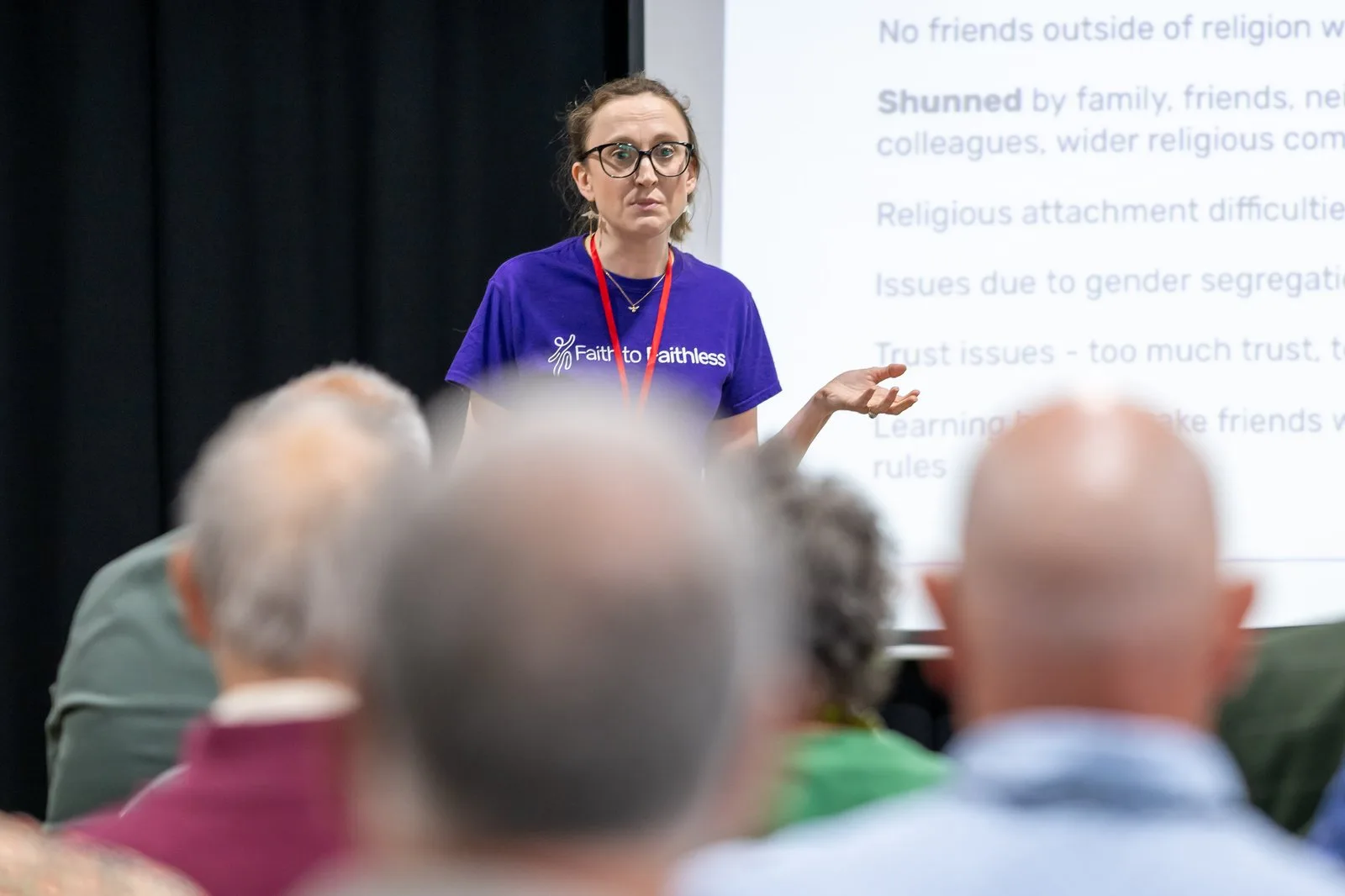
For professionals and policymakers
People leaving high-control religions have often had very little education, may have experienced forced marriage, and can lose their jobs and housing as soon as their loss of belief is discovered. In 2023, the Government’s Independent Faith Engagement Review recommended that Government fund support for people leaving high-control groups, and those facing isolation, homelessness, shunning, and ‘honour’-based abuse. It singled out Faith to Faithless for providing ‘valuable support’.
In 2026, research with Faith to Faithless found that Home Office asylum policy gives non-religious claimants the ‘weakest protection’ of any religion or belief group. We want local and central government to recognise apostates’ needs in housing, education, health, and asylum policy.
Apostasy awareness training
People leaving high-control religions often need help from public services, but many services don’t understand what they’re facing. Our training, led by people with lived experience, helps police forces, NHS teams, social services, local authorities, universities, and charities to recognise the risks and respond well. Since January 2025, we’ve trained more than 270 people, including staff from major national charities and helplines, and 75 at a youth safeguarding conference this year.
- Safeguarding implications for your organisation.
- The issues apostates most often face, from shunning and ‘honour’-based abuse to homelessness and lost education.
- How leaving religion can be harder for people who are also LGBT+, women, or from minority ethnic communities.
- Helpful and unhelpful ways to talk about leaving religion.
- Where to refer people for specialist support.
Questions people ask us
What is a high-control religious group?
A high-control group is one that controls many parts of its members’ lives, such as who they marry, what they wear, who their friends are, and what they’re allowed to read or watch. Leaving can mean losing family, friends, community, and sometimes a home or job.
Who do you support?
Anyone, whatever religion or group they’ve left. Faith to Faithless focuses on the person and what they’ve been through, not on the group they’ve left.
For example, we support ex-Christians and people struggling with doubts in evangelical, Pentecostal, Catholic, Brethren, and other churches; former Mormons and people questioning Mormonism; former Hindus and Sikhs, and people doubting their faith; ex-Muslims and people struggling with doubts about Islam; former Jehovah’s Witnesses (ex-JWs) and people questioning the Witnesses; people leaving or questioning ultra-Orthodox or Haredi Judaism; and people leaving or doubting other high-control groups, even UFO religions and small, idiosyncratic cults.
You don’t have to have left to talk to us. If a group controlled your life, or you’re struggling with doubts about it, we can help.
What is an apostate?
An apostate is someone who has left a religion. In some communities the word is used as an insult, and leaving can lead to shunning, threats, or violence.
People feel very differently about the word. Some of the people we support use it about themselves, as a way of reclaiming a label used against them. Others won’t use it, and for some it doesn’t fit the religion they left at all. Use whatever words feel right to you.
We use it because it names a specific set of risks, like being cut off by family, forced marriage, or ‘honour’-based abuse, and that helps people get the right support from services and in the asylum system.
Is it safe and confidential to contact you?
Yes. Calls are free and won’t show on your phone bill. You don’t have to give your name. Our volunteers are trained, and Faith to Faithless works under a strict safeguarding policy. We’ll only share information if someone is at serious risk of harm.
Do I have to be an atheist or a humanist?
No. We support anyone leaving a high-control religious group, whatever they believe now. Many people who contact us are still questioning.
What if the helpline is closed?
Email helpline@faithtofaithless.com and we’ll reply during opening hours. If you’re in danger, call 999. If you need to talk to someone now, Samaritans are free on 116 123, day or night.
Help us be there for more people
Faith to Faithless is funded entirely by donations. Your gift helps keep the helpline open and our peer support groups running.
Get in touch
For support, call the helpline or email helpline@faithtofaithless.com.
For everything else:
info@faithtofaithless.com